
 [show-current-language-name]





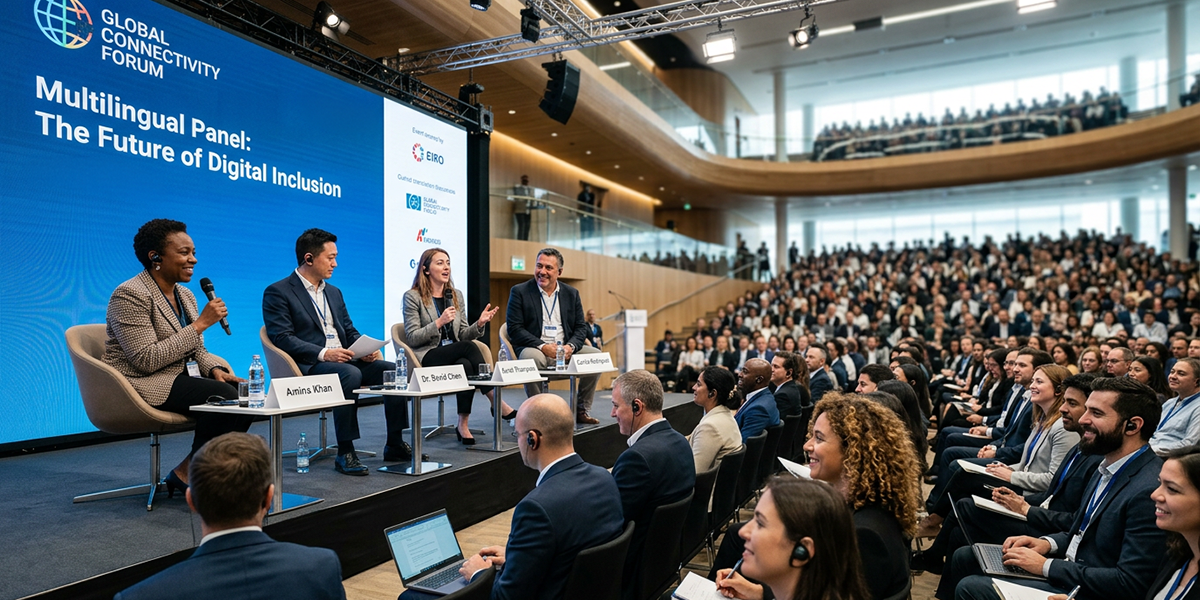
Multilingual communication used to be something organizations planned for occasionally—large events, global announcements, high-stakes meetings. Today, it’s part of everyday operations.
Teams are collaborating across regions, running meetings in multiple languages, and sharing information at a much higher frequency. But the way interpretation has traditionally been delivered hasn’t evolved at the same pace.
What’s emerging now is a different model, one where AI and human interpreters work together to support communication at scale.
A Model Designed for Another Era
Traditional interpretation was built for a very specific context:
- High-stakes, formal settings
- Limited frequency (conferences, diplomacy, legal proceedings)
- A linear model: Human → Human
The Rise of Multilingual Communication
What’s driving this shift?
- Global, distributed workforces
- Remote and hybrid collaboration
- Increased demand for inclusive communication
- The rise of digital events and content
Multilingual communication is no longer occasional, it’s mainstream and continuous.
AI Is Changing the Structure of Communication
AI is not just improving translation, it’s fundamentally reshaping how communication works. Instead of being a separate service, language is becoming embedded into the communication layer itself.
This means:
- Real-time translation is always available
- Language accessibility is built into meetings and platforms
- Communication can scale across more participants and languages
In this new model, AI doesn’t just translate—it coordinates the flow of communication.
From Language Services to Infrastructure
This is a critical shift. Language is no longer a “service” you add when needed.
It’s becoming infrastructure; always on, instantaneous, and scalable.
This enables:
- More frequent multilingual interactions
- New use cases (daily meetings, internal updates, training)
- Broader participation across global teams
Where AI Performs Best
AI interpretation is already highly effective in structured environments such as:
- Webinars and presentations
- Technical content
- Routine multilingual meetings
- Large-scale online or hybrid events
Its strengths are clear:
- Scalability
- Multi-language support
- Speed and accessibility
This is where AI is driving the fastest adoption.
But Human Interpreters Are More Important Than Ever
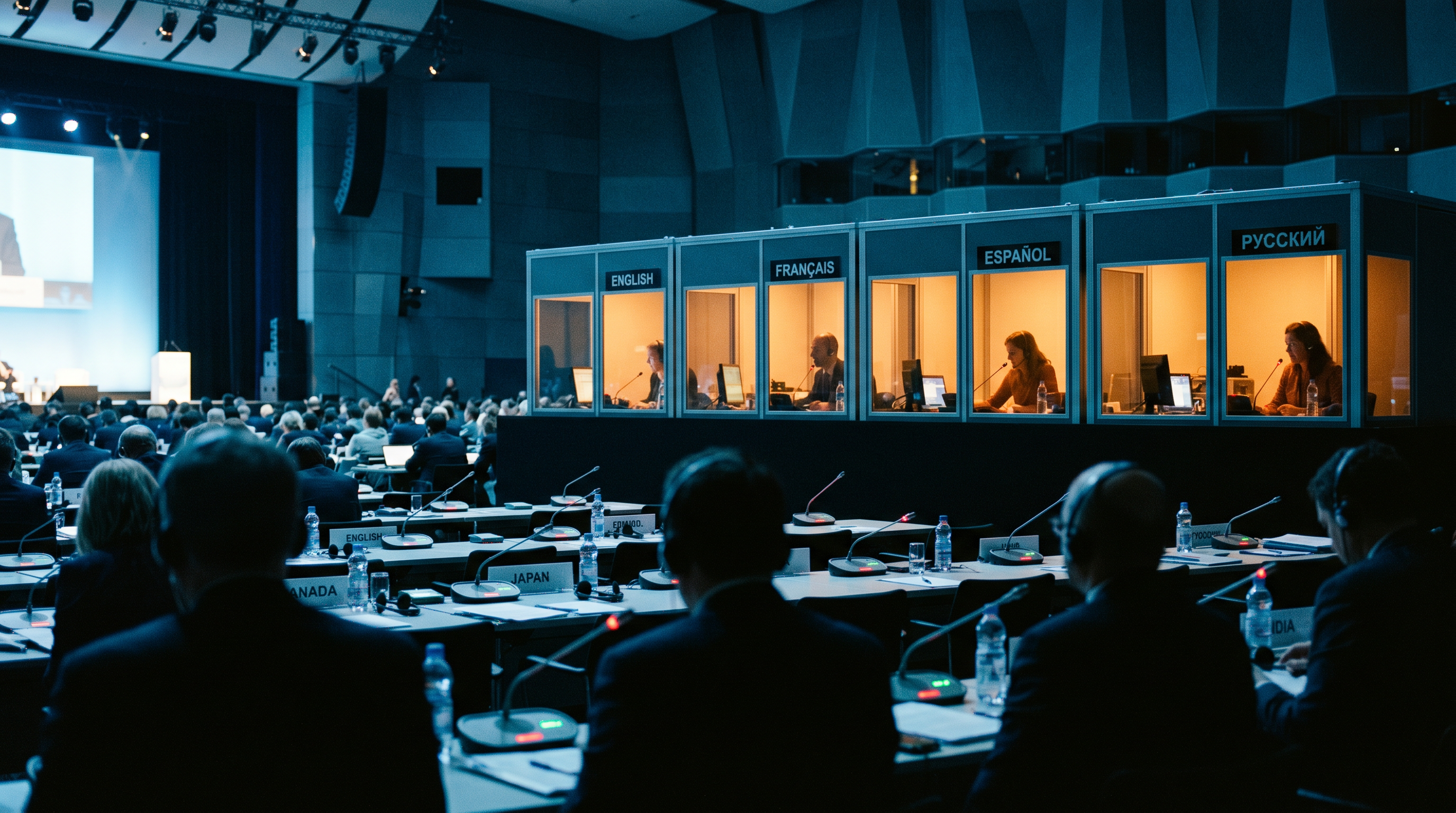
Despite rapid AI growth, human interpreters are not being replaced. In fact, their role is becoming more critical in:
- High-stakes conversations
- Sensitive or nuanced discussions
- Contexts where tone, intent, and meaning matter deeply
Humans bring what AI still cannot fully replicate:
- Cultural understanding
- Emotional nuance
- Contextual judgment
This is not a story of replacement, it’s one of expansion.
The Real Challenge: Designing Seamless Communication
As AI becomes more integrated, the challenge shifts from translation to experience. The goal is simple:
Create seamless, real-time communication across languages.
But achieving this requires balancing:
- Speed vs accuracy
- Automation vs human oversight
- Scale vs trust
Even small issues in real-time systems can quickly erode user confidence, making reliability and trust critical design factors.
This is not a translation issue. It is an operational risk.
The Future Is a Layered, Hybrid Model
The most effective approach is not choosing between AI or humans, it’s combining them. A layered ecosystem is emerging:
These models don’t compete, they coexist, each serving a different purpose.
What the Data Tells Us
Industry trends reinforce this shift:
- 60%+ of enterprises already use AI translation in daily operations
- AI translation adoption is growing at ~25%+ annually
- Human interpretation demand continues to grow steadily
The takeaway? AI is scaling communication, while humans remain essential for meaning and trust.
This is not a translation issue. It is an operational risk.
The Future of Multilingual Communication
We are moving toward a new paradigm:
- AI = coordination, scale, accessibility
- Humans = meaning, nuance, trust
Together, they enable something new:
Communication where language is no longer a barrier.